Four Seasons Exhibition

This Exhibition made possible
by a gift from
Mr. and Mrs. M. Burnham

The arrival of each new season is acknowledged and celebrated in the Japanese culture. This
sensitivity to seasonal change is an important part of Shinto, Japan’s native belief system, which
has focused on the cycles of the earth. Similarly, seasonal references are found everywhere in
the Japanese literary and visual arts. A distinctive Japanese artistic convention is to depict a

147b4673-4da1-4887-985f-0d679a4adada

Bamboo in Four Seasons

A distinctive Japanese artistic convention is to depict a single environment transitioning from spring to summer to autumn to winter in one work. In this way, Japanese painters and poets expressed not only their fondness for this natural cycle but
also captured an awareness of the inevitability of change, a fundamental Buddhist concept. This tradition expresses the confluence of Shinto and Buddhism in the use of seasonal references. Shiro Nakagawa was acknowledging this tradition when he suggested the four seasons concept to Paul Saito, Shinzen’s original landscape architect. He was inspired by the 15th century Japanese artist, Sesshū Tōyō, famous for his 50 foot long hand scroll taking the viewer on a journey through the four seasons.

146_clarkbonsai_Liquidambar_Fall

Our Four Seasons exhibition opening November 1 featuring deciduous bonsai will display trees with the last of their green foliage. As the weather cools and the days shorten, we can enjoy the gorgeous color display of the deciduous tree species. Some of these trees are selected for bonsai simply because of their spectacular fall colors. The gingko, for example, will show us intense yellow-gold autumn foliage. The fall color of the bald cypress is typically a lovely rust, we can see anything from yellow-orange to bronze hornbeams or the vibrant red of the
Japanese maples.

After the Fall

After the fall color display has passed, bonsai show us another image entirely: the Winter Silhouette. When deciduous bonsai have shed all their leaves, we see the artistic skill that formed the structure of the tree. Only then can we fully appreciate the angularity and refinement of the branch structure. This is like the study of architecture or anatomy. Some bonsai exhibits are exclusively devoted to showing the trees in their Winter Silhouette, particularly for the appreciation of the patience and skill required to develop a beautiful “skeleton.”

Irene Tamura’s Japanese Maple forest through four seasons.

Maple Forest-01
Maple Forest-02
Maple Forest-03
Maple Forest-04

Fall Colors

This exhibition will also feature winter blooming bonsai including camellia and Ume (flowering apricot also known as plum blossom). At the end of the exhibition, the final seasonal image occurs when the bright green or red leaf buds of early spring emerge on the bare branches, bringing the journey of the seasons full circle. This is a dynamic exhibition that is worth revisiting
a few times between November and March to fully appreciate the changing displays of the deciduous bonsai as they transform through the seasons.

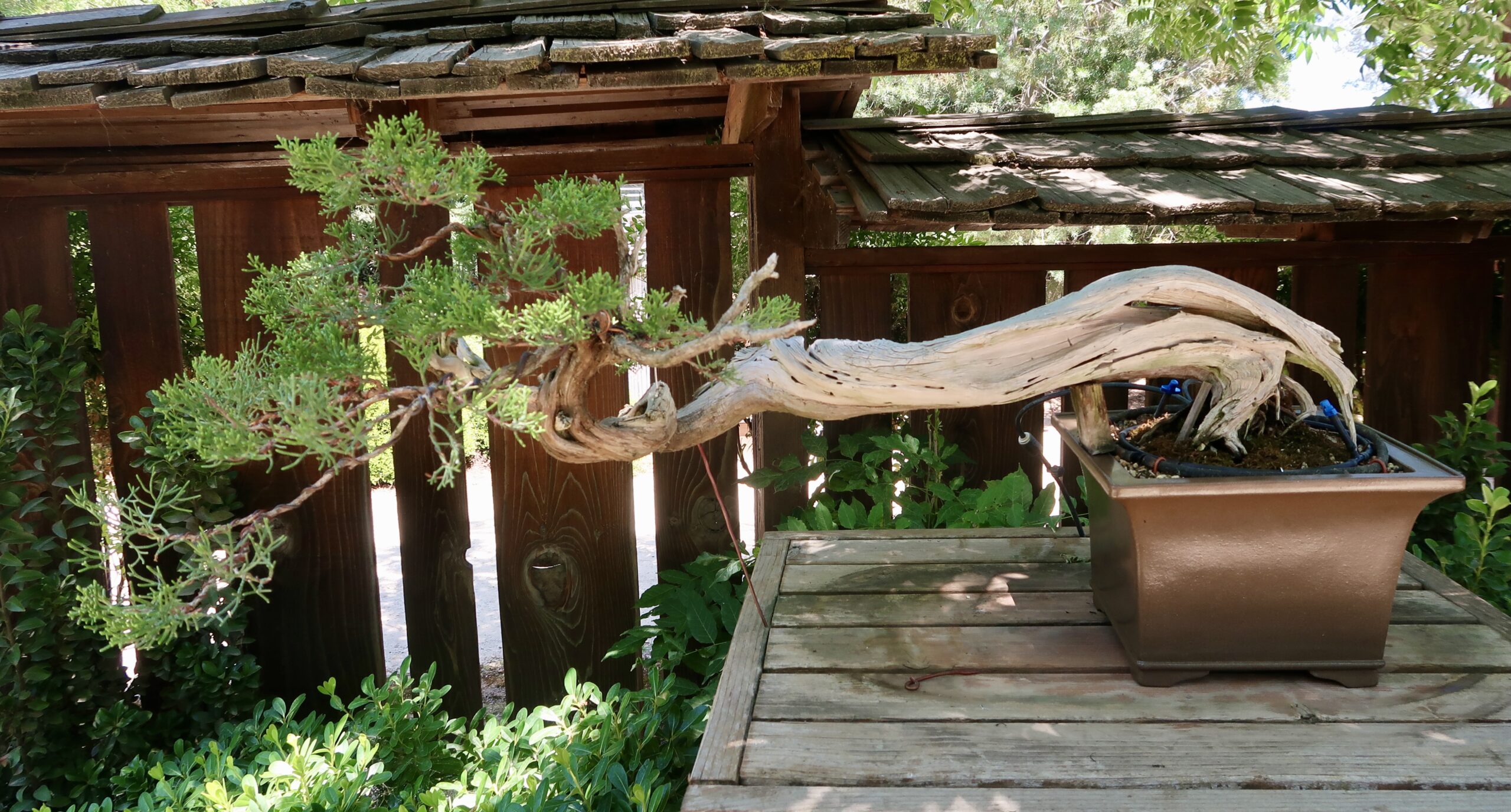
Although the Four Seasons Exhibition is primarily a deciduous display, this year visitors will also have the opportunity to view three very special evergreen bonsai: the Sam Kawaguchi Needle Juniper Forest, the first bonsai collected by Founder Bill Clark and his favorite; the Katsumi Kinoshita Monterey Cypress, a coastal signature tree from his 60 + years of bonsai artistry and mentorship; lastly, the oldest bonsai in the Collection, the over 1000 year old California Juniper styled by Visiting Bonsai Master Todd Schlafer taking his inspiration from the ancient bristlecone
pine.

Past Exhibit

Wild Thing

Missed the "Wild Thing Exhibit" but would like to Read More.

16G_clarkbonsai_BaldCypress
CBC_0080

Ranked one of the best public bonsai collections!

Support our future exhibits!

Support future Clark Bonsai Museum exhibitions and help us continue presenting world-class displays that educate, inspire, and preserve the living art of bonsai.

John Naka Memorial Bonsai Exhibition August 2026 – Japanese Cultural Center George J. Doizak Gallery, Downtown Los Angeles

A tribute to the master who shaped bonsai in the West, this exhibition highlights John Naka’s life, vision, and timeless contributions to the art form.
Details on this special memorial exhibit coming soon.

TOURING EXHIBIT

More Learning

Collaborative Opportunities

We welcome partnerships with museums, universities, and organizations interested in showcasing the Clark Bonsai Museum’s living art collection. Collaborative exhibitions and programs create opportunities to share the beauty, philosophy, and history of bonsai with communities near and far.

Future Exhibits in The Clark Bonsai Museum

012_clarkbonsai_JMaple_FallAfterCarving

Four Seasons: A Showcase of Deciduous

June of 2026 to Oct. 2026

As living artifacts, bonsai occupy a three-dimensional space, height, width, and depth, but the art of Bonsai also involves the dimension of time. In bonsai, the concept of time has three expressions: the tree’s true age according to when it sprouted. How long has it been a bonsai, that is, the time elapsed since its creation, the age the tree aesthetically represents, and finally, the generational aspect of an entity that exceeds a lifespan longer than our own.

3G_clarkbonsai_JapaneseMaple

March of 2026 to June of 2026

Explore the style of yose-ue and other multiple-trunk techniques, where trees are planted together to represent landscapes in miniature form.  These works offer a glimpse into the lilliputian world, of peaceful maple and elm groves to towering conifers and striking mountain views.

Srping Exhibit_1938-s

Journey to the Fourth Dimension: The Element of Time

June of 2026 to Oct. 2026

As living artifacts, bonsai occupy a three-dimensional space, height, width, and depth, but the art of Bonsai also involves the dimension of time. In bonsai, the concept of time has three expressions: the tree’s true age according to when it sprouted. How long has it been a bonsai, that is, the time elapsed since its creation, the age the tree aesthetically represents, and finally, the generational aspect of an entity that exceeds a lifespan longer than our own.

fresno Skyline

Museum location

Clark Bonsai Museum

114 W Audubon Dr

Fresno, CA 93720


We would love to hear from you.

Please enter your name.
Please enter a message.

Interactive and Educational Exhibitions

Hands On Learning

Hands-On Bonsai Classes: Interactive Learning (First Saturday Each Month, reservations recommended, fee involved)

Sign Up

Bonsai Team Building Workshops (reservations required, fee involved)
Learn more

Children’s Bonsai Adventure

Young visitors are invited to embark on a scavenger hunt through the museum, solving puzzles and collecting clues about different tree species, styles, and care techniques.

World Bonsai 80s Poster

Seasonal Festivals and Special Events

  • Jan – Shogatsu, New Year’s Decorations, Games, Activities (Dec. 31- Jan. 4)
  • 19 - Day of Remembrance of Japanese Internment
  • May – World Bonsai Day*
  • 6, 9 – Hiroshima and Nagasaki Commemoration
  • – Annual Anniversary Celebration*
  • – Annual Christmas Cookie Exchange*

*dates to be announced

The Clark Bonsai Museum’s exhibitions weave together art, science, history, and the restorative touch of nature. Visitors are invited to wander its pathways throughout the year, discovering new perspectives with each return. Whether you seek the serenity of ancient trees, the thrill of contemporary creativity, or the joy of hands-on engagement, the museum’s ever-changing schedule of Programs ensures there’s always something extraordinary to see and experience.

Need help? Book a bonsai experience time to suit you