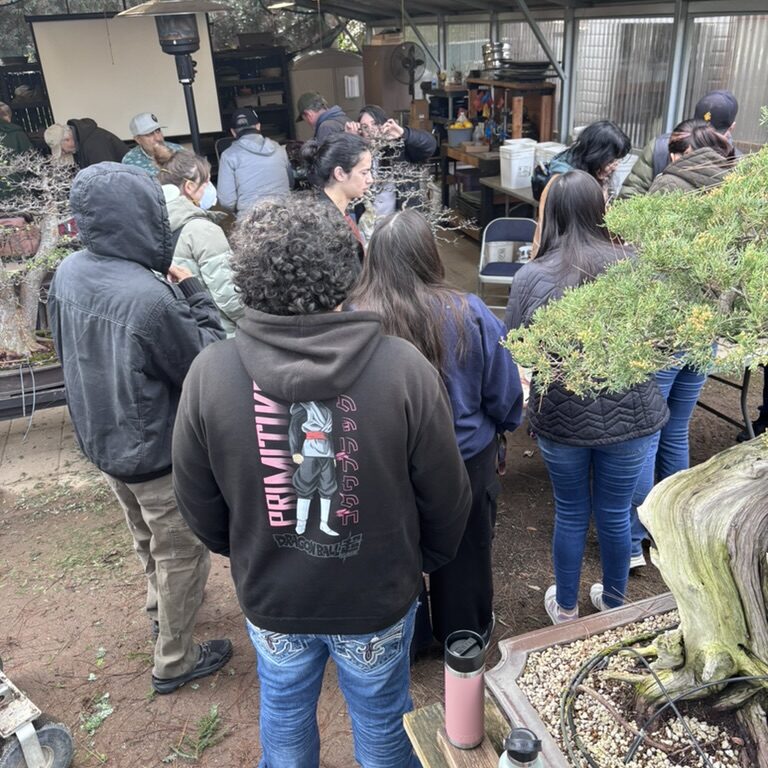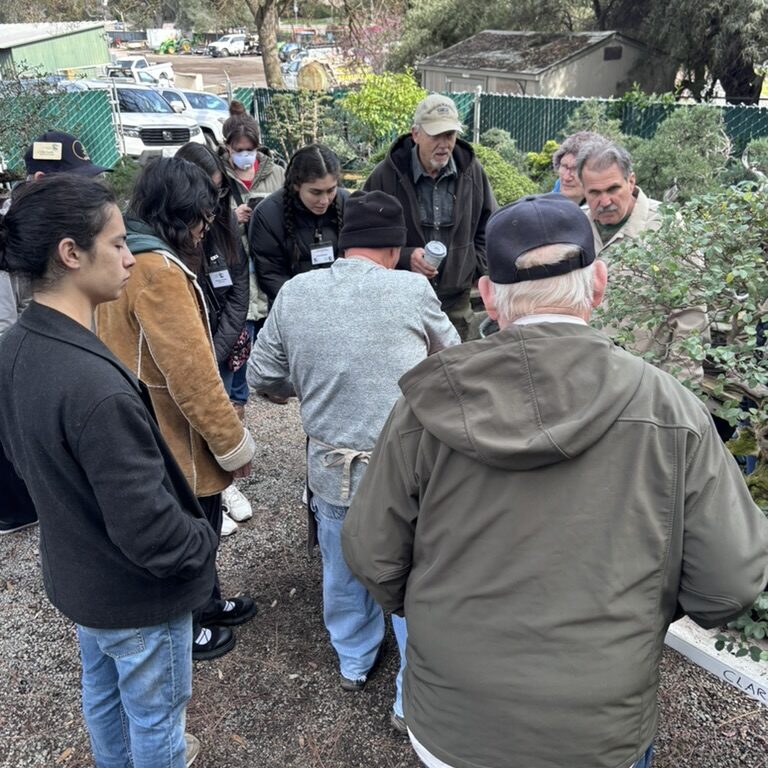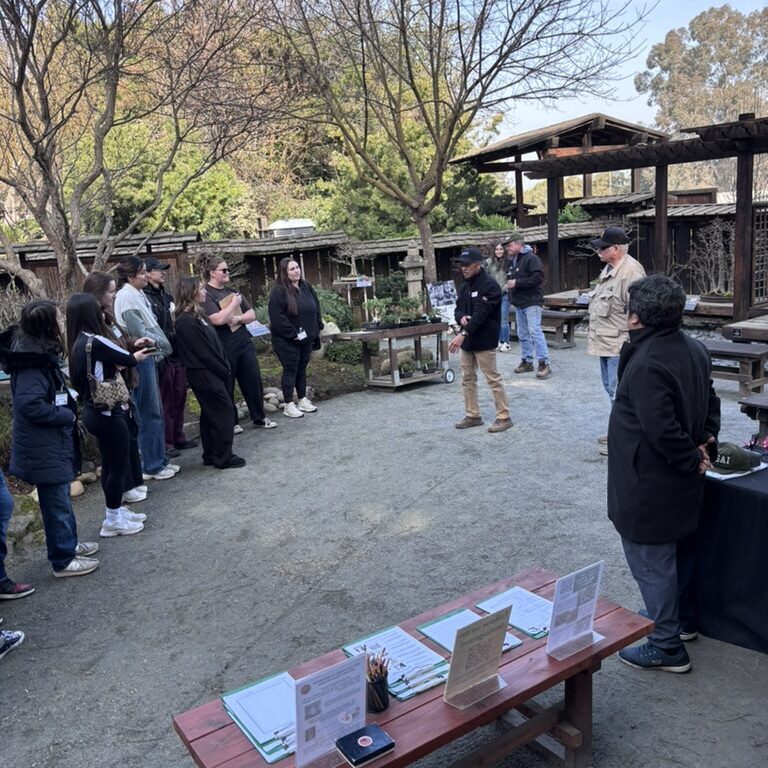
During the Spring 2026 semester, 35 students have the unique opportunity to learn directly within the museum’s world-class collection, part of the Golden State Bonsai Federation (GSBF). Their focus: understanding how Japanese and Japanese-inspired art forms express profound relationships between humans and the natural world. Through bonsai, students encounter a living tradition—one that distills landscape, time, and care into miniature form.
What makes this program especially meaningful for museum visitors is that students are not behind the scenes—they are an active part of the Clark Bonsai experience. Through a service-learning model, they contribute directly to the life of the museum while deepening their academic knowledge. This approach, widely recognized as a high-impact educational practice, connects meaningful community service with rigorous learning and civic engagement.
Students rotate through four essential areas of museum work, each shaping the visitor experience in visible and lasting ways:
- Curatorial Work: Students help nurture and shape bonsai trees, design exhibitions, and care for the collection—ensuring that each display reflects both artistic vision and horticultural excellence.
- Docent Engagement: Many of the voices guiding visitors through the garden are students themselves, offering tours, answering questions, and creating welcoming, educational encounters that connect people to the art of bonsai.
- Content Creation: From interpretive labels to digital content, students research and write the materials that enrich visitors’ understanding of each tree and its story.
- Landscape and Design: Students help maintain and enhance the museum’s physical environment, including traditional elements such as the tokonoma, contributing to the serene and contemplative atmosphere visitors enjoy.
In addition, each student undertakes an individual project, bringing fresh perspectives and new insights into the museum space through end-of-semester presentations.
For visitors, this means the Clark Bonsai Museum is not only a place to observe beauty, but also a place where learning is constantly unfolding. The presence of students—curious, engaged, and actively contributing—adds a vibrant human dimension to the garden. Their work ensures that the museum remains a living institution: one that preserves tradition, fosters education, and invites every visitor to form a personal connection with art and nature.
At the Clark Bonsai Museum, the next generation of scholars, artists, and community members is growing—just like the trees themselves.